
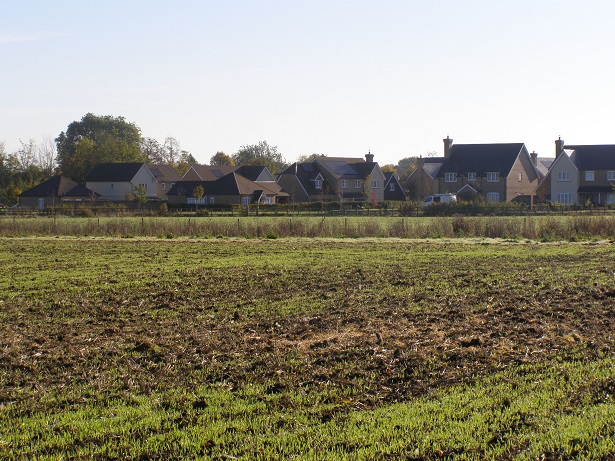
Let’s talk about how to fix Britain’s housing crisis and boost its sluggish economy, only please ignore the elephant in the room. Land reform is a controversial subject so instead focus on Nimbys, planning bottlenecks, interest rates and labour shortages in the building industry. Just ignore the fact that half the cost of a new build house is the inflated price of the land on which it is constructed.
In 2020 Jack and Diane, not their real names, purchased a newbuild in the village of Orwell, on a small estate call West Croft. It cost them just over £400,000 which is what passes for affordable in South Cambridgeshire where average house prices are above the national average of £280,000.
The couple had £50,000 equity in their previous house but still needed to take out a £350,000 mortgage – repayments £1800 per month. Typically, up to 40% of the cost of a house is the land on which it is built, although in this case it was 25%. So out of the £1800 monthly repayment £500 was to pay for a tiny piece of what was once a farmer’s field. If the forty families living on the West Croft estate were each left with an additional £500 a month then the money circulating in the local economy would increase by £240,000 a year. Expand this across the rest of Britain and it is clear if Rachel Reeves is seeking ways to help the economy grow – and ending the country’s housing crisis – land reform should be somewhere on the list .
The building of low-cost housing in Orwell ended in 1995 when K B Tebbit purchased a farm formerly owned by the Miller family. In the 1980s Alan Miller sold a piece of land near the centre of the village stipulating the 39 houses built on it should be affordable for existing residents. Despite objections the development went ahead. Received wisdom suggests Nimbys prevent anything being built anywhere in South Cambridgeshire, however only a small minority of developments are refused planning permission each year.
After the purchase of the Miller farm K B Tebbit’s annual turnover doubled and continued to increase annually, roughly in line with inflation. Despite this, over the course of the next 12 years, it failed to break even (a cumulative loss of £6000). Instead, the farm was merely providing a wage for the farmer.
The West Croft development in 2018 increased the value of K B Tebbit by £4.5 million. Today the farm has a net worth of £7.2m but is now classed as a Micro Company indicating there has not been a significant increase in turnover. As the arable farming sector has taken a £1.4 billion hit due to the war in Ukraine there is also a question mark over the profit K B Tebbit derives from farming.
So, if the residents of West Croft had that extra £240,000 to spend each year would it provide the UK economy with a bigger boost than a farm receiving a £4.5 million boost which had little impact on its profitability?
Would that extra £500 a month enable Jack and Diane to start a family?
Would the £240,000 fed into the local economy see more jobs created and businesses started?
Might Jack or Diane use their extra £500 per month to start their own business?
Has the financial windfall farmers received as a result of ‘Land Value Capture’ been put to good use? Have they purchased more equipment and employed technology to increase their efficiency? Given the time that motorists in South Cambridgeshire spend in queues of traffic behind antiquated agricultural equipment moving between farms which share it rather than purchase their own, it seems not.
Arable farmers are relatively immune to pressure, usually applied by supermarkets, to produce food more efficiently. The increase in the value of agricultural land close to towns or villages has hindered, rather than helped, the drive to improve Britain’s food supply. Instead farms often use their windfalls to diversify into areas such as holiday lets and other non-food producing activities. It is likely then that Jack or Diane’s £6000 a year would be better spent on their own business rather than subsidising the local farmer.
Land Value Capture – A Wizard Idea
Some think the person who dreamt up Land Value Capture, which enabled K B Tebbit to conjure wealth out of thin air, deserves the Nobel prize for economics, although they themselves would probably settle for membership of the magic circle. If you are building a guided busway or railway and choose to route it across open countryside the farmland either side of it will rise in value due to its development potential, sometimes by enough to fund the busway or railway itself. Unfortunately, there comes a point when this economic alchemy is revealed as merely the reflection of smoke in a mirror. That is why there are Cambridge sized cities in China, complete with science parks, cinemas, supermarkets and industrial buildings but not a single resident. It is slightly concerning that Cambridge’s growth itself is being driven as much by Land Value Capture as innovations in science and engineering. However, empty six storey laboratories are tomorrow’s problem, house prices, and their impact on the UK economy, are today’s.
In The Vanguard
Jack and Diane were fortunate to find a house in Orwell rather than closer to Cambridge where the value of land is higher, and developer’s margins squeezed to the point where it is almost impossible to build an affordable house of reasonable quality. First to be cut to remain profitable is the infrastructure promised, schools, community centres, shops and GP surgeries. Next there are so many corners cut the homeowner suspects their house was built by an Eskimo. While Jack and Diane would have discovered minor snags after moving in, there were no major problems on the West Croft development, unlike on the Darwin Green estate in Cambridge where owners discovered their new homes had been declared unsafe and about to be demolished.
A scheme called Vanguard was supposed to provide a low-cost home for people prepared to build one themselves. Unfortunately, the complexity of constructing a modern house, and the cost of buying materials piecemeal, have both proved prohibitive. Most taking this route resorted to employing a ‘man with a van’ builder who themselves lacked neither the buying power of a developer, or access to skilled labour, and the result was a house which was both poorly built and expensive.
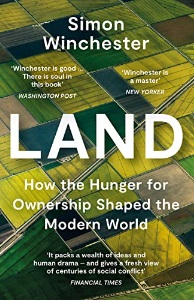
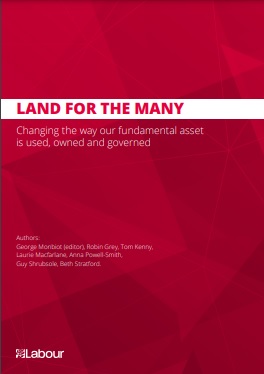
The solution, a difficult one, which is why governments are usually reluctant to even consider it, is the reform of land ownership, not a new idea as anyone who has read Simon Winchester’s book ‘Land’ will know as he describes numerous examples of such reform around the world as well as here in Britain. Had labour won the 2019 election there were plans to reform land ownership. One suggestion in the publication ‘Land for The Many’ was to separate the ownership of land from that of the house built on it. Something that requires a leap in imagination, so here goes.
The Art of The Possible
The reforms proposed in ‘Land for The Many’ would reduce house prices by half, this would destroy, at a stroke, a vast repository of personal wealth – roughly £4.3 trillion. This wealth may be illusory but is perceived as an additional wage and treated as an investment. Houses are also used as collateral for borrowing and so halving their value would see credit card limits reduced. As well, many people’s pension plans would need rethinking.
Objections to the Brookside development in Orwell were not only aimed at low-cost housing but any development which meant the supply of houses in the village met demand causing the price of existing properties to fall.
Even Jack and Diane would be unhappy to discover their equity in a house after four years of mortgage payments, was negative. There might, however, be another approach which would achieve much the same ends with far less pain.
The Alternative
A gentler form of land reform would involve turning all farmland into a common; a rolling back of the enclosure act but retaining the enclosures. Farmers would still be working the same land but could no longer sell it to a developer and instead would merely surrender it when they found it was no longer providing a return. Local government would then make it available to other farmers, rewilding organisations or developers, whichever was deemed appropriate.
The company City View Wheel has erected a ferris wheel on Cambridge’s Midsummer Common which, as the name suggests, is common land. It charges people to ride on the attraction, but if it decides to move the wheel to a new location it cannot sell the land merely because it is no longer needed. There is no reason why this same ownership model cannot be applied to farming. It would have minimal impact on farmers but provide significant benefits for the UK economy.
Presumably farmers would only surrender poor quality land for building, ending the situation which sees developments rejected at the end of an extended planning process because the site is on prime agricultural land.
It would encourage farmers to become more efficient and release land from farms which were not profitable.
It would take away from farmers the responsibility to manage rewilding and conservancy schemes as the land for this could be managed by organisations less conflicted and better qualified to carry out the work.
It would lower the barrier for entry for young people entering farming bring new skills into the sector.
It would encourage consolidation, creating larger farms which could afford to buy the equipment needed to make them more efficient.
Tebbit Farms has proposed adding a further 5 homes to West Croft and also offered up another piece of land as a potential site for a development the same size as West Croft. If the land it farms was regarded a common land this would reduce the cost of the houses built on it by 25% because instead of receiving payment for the land the farmer would be compensated for loss of earnings calculated on the farm’s income per acre of land. The result would be almost 50 affordable houses.
Don’t Bank on It
Often a financial journalist will point out that while a certain developer is only producing a trickle of poorly constructed houses its shares are worth buying due to the continued appreciation of its land bank. If land was a common it could not appear on the developer’s balance sheet and until it was used for building anyone else could claim it for an alternative use.
Just as farmers would be forced to concentrate on farming, developers would become focussed on building. Neither could hide inefficiencies in their business model by trading land.
The impact of newbuild houses coming onto the market at half the current price would be slow to take effect but would stop house prices rising and eventually reduce them at a rate which did not plunge existing owners into negative equity.
Theoretically a government elected with a 157-seat majority should be able to bring about the changes in land ownership required to prevent house prices remaining a drag on the UK economy and young, highly skilled workers, subsidising two inefficient and failing industries. The danger is that a lack of courage and vision will result in five years of piecemeal compulsory purchase of farmland and attempts to regulate the construction industry, leaving the UK economy growing as slowly before the next election as it was after the last one.