

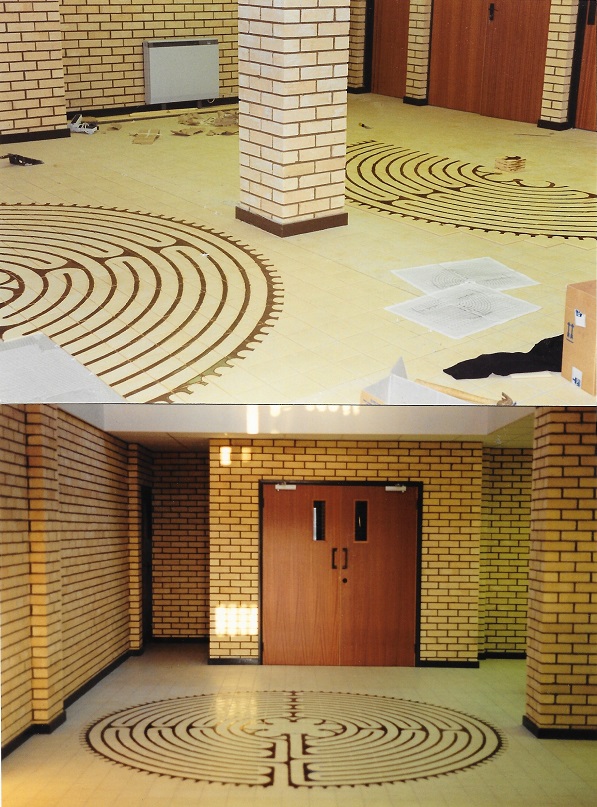
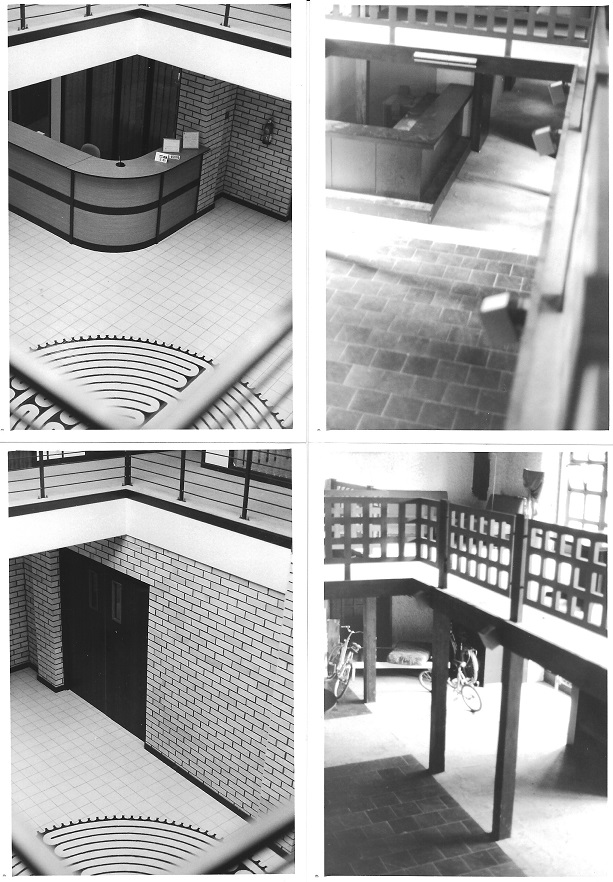
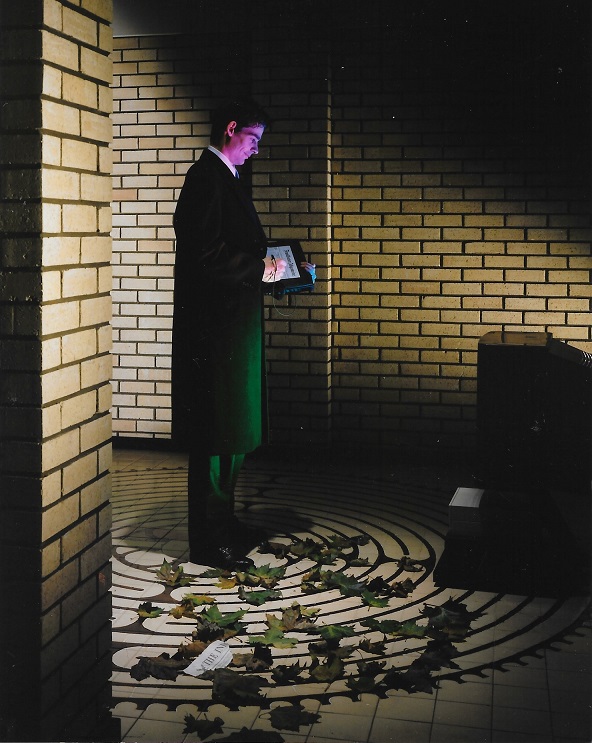
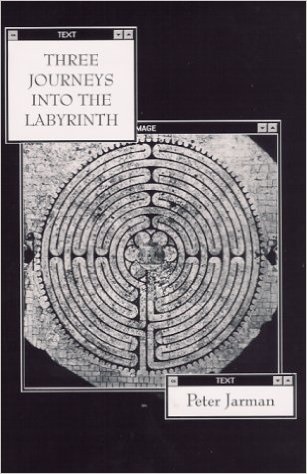
Published in 1990, Three Journeys Into The Labyrinth consists of three fictional accounts of the same sequence of events. Most of us wouldn’t be able to experience the virtual world of the Internet for another two decades, so only belatedly have we discovered that unlimited access to information often obscures an underlying truth. As well as the danger posed by the increasing separation of the virtual from the physical, the book describes the impact of online communication on both collective and individual consciousness.

The contents of ‘Three Journeys Into The Labyrinth’ was fed into AI-based software, which searched the three stories for conceptually similar passages of text. This provided the basis for Fahrenbrink. One of the locations for the three stories, a deserted hotel in Germany, was used as a metaphor for the computer on which the software ran. The author is confined to the hotel and interrogated by key characters from the stories; again, a metaphor, but this time in respect of the computer instructions deconstructing the text. Fahrenbrink takes further the argument that online communication alters consciousness and suggests that it also challenges basic philosophical concepts, such as form and difference. The book predicts that, ultimately, only computers will be privy to any truth residing in the big data accumulating in networks.